
This post contains affiliate links. If you click and buy, I may earn a commission at no extra cost to you. I only recommend brands and products that I personally trust and believe in.
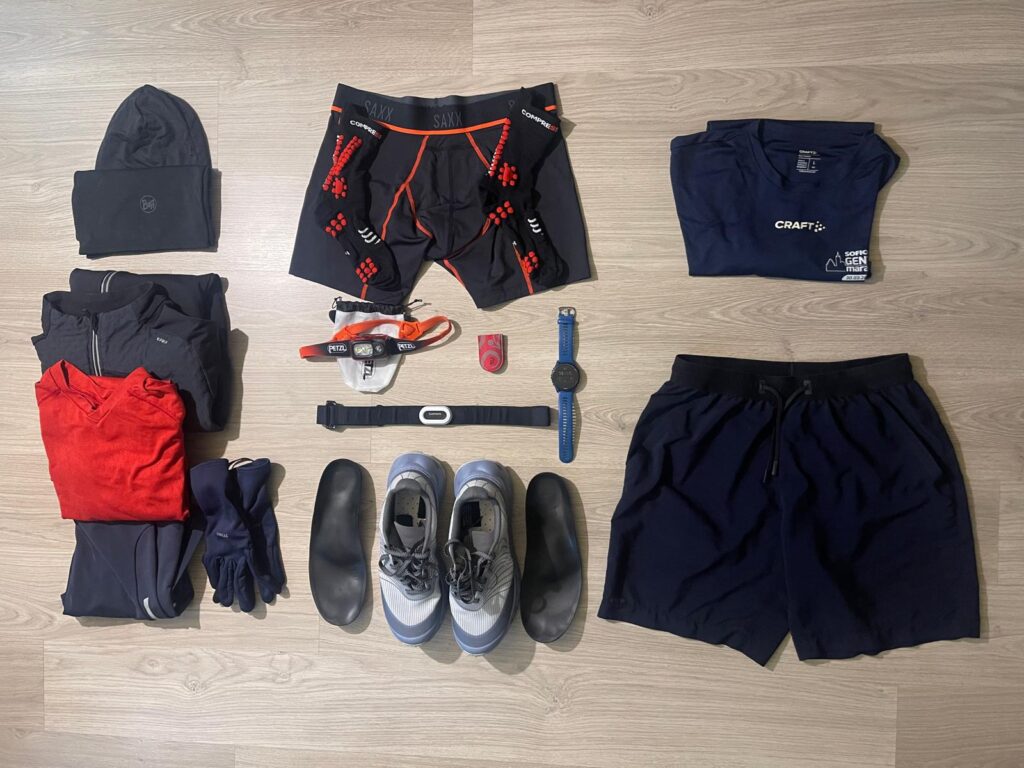
When I restarted running, I thought I needed hundreds of euros worth of gear to look like a “real runner.” I spent hours researching compression socks, heart rate monitors, GPS watches, and premium running shoes.
I was wrong about most of it.
The only thing I truly lost was time spent researching — which, in the end, wasn’t wasted at all. Instead of buying expensive gear immediately, I experimented with what I already had. That taught me more about what actually matters than any review ever could.
Here’s the truth I learned after running more than 3,000 kilometers: gear supports your running habit — it doesn’t create it. You need far less than you think to start, but the right pieces at the right time make a massive difference.
As I mentioned in my beginner’s guide and how to start running post, starting simple and upgrading strategically beats buying everything at once.
This guide covers everything I’ve learned about running gear — what to invest in immediately, what to skip, and how to build your collection as you progress.
Chapter Summary: | Start with the essentials, upgrade strategically. Gear supports consistency but doesn’t replace it.
1. The Foundation: Getting Your First Running Shoes Right
Table of Contents
ToggleWhen I restarted running, I randomly chose Runner’s Lab and came in prepared with a shortlist of shoes after days of comparing models online.
I thought I was ready to pick the perfect pair — until the gait analysis came, turning everything I thought I knew upside down and showing me exactly what my feet needed.
That first visit made Runner’s Lab my trusted go-to for running shoes and custom insoles. With their friendly and knowledgeable approach, the staff make every visit feel easy and welcoming.
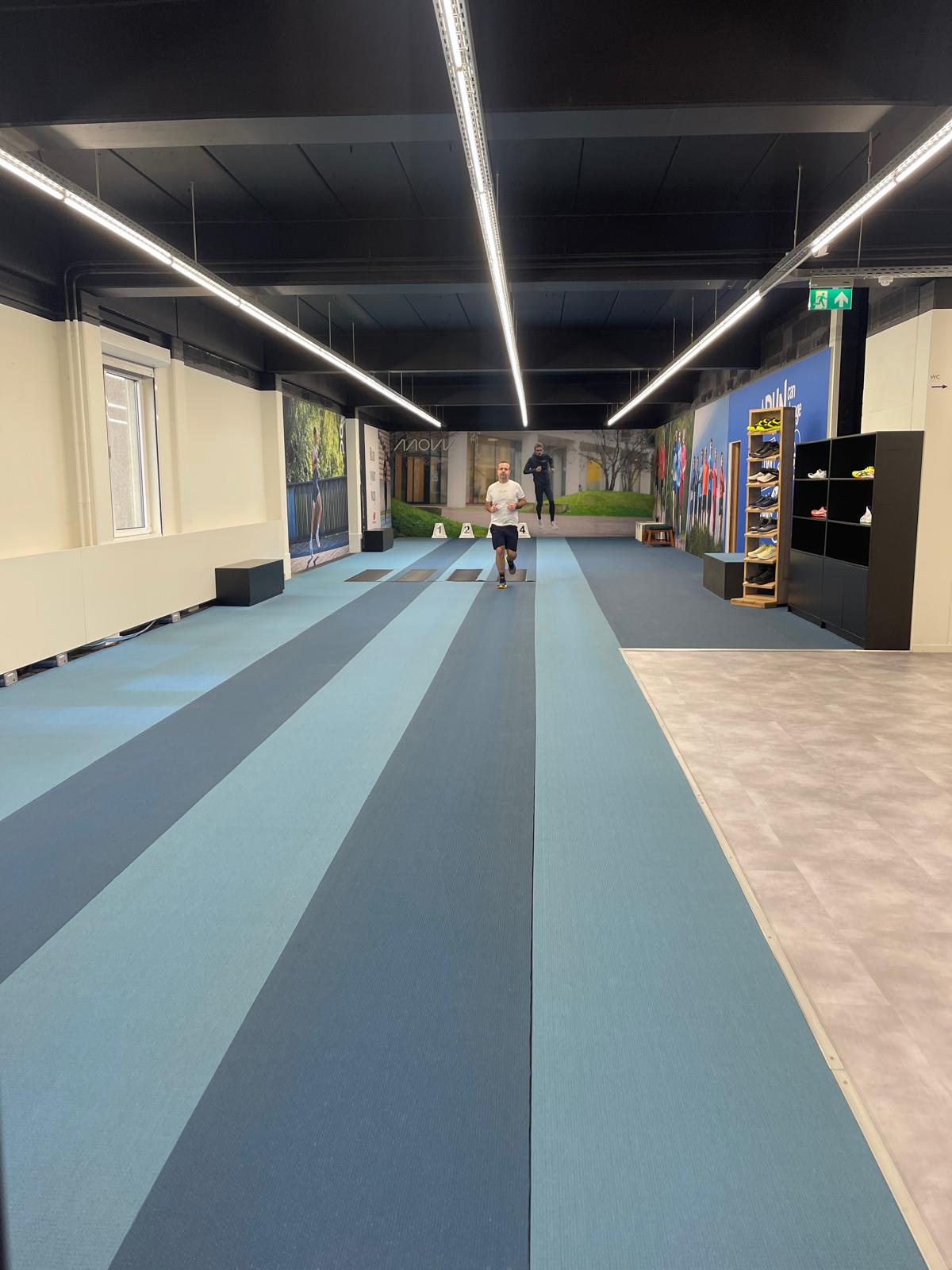
What Happens During a Gait Analysis
You run on a short indoor track while sensors measure your gait, foot strike, and pronation. The store expert then matches you with shoes that fit your biomechanics.
I also had one more challenge: custom insoles prescribed by a podologist. Years of using the wrong safety shoes messed up my toe alignment, so my insoles gently push my big toes away from the others.
That made finding the right shoe tricky. On my first gait analysis, I tried about eleven pairs. Only two worked well with my insoles: the Brooks Ghost 15 and the Hoka Bondi 8.
Both fit, but the Brooks felt lighter and more natural — the Hokas were so cushioned they felt like tanks. I went with the Brooks, and that choice paid off.
Later, I had new 3D-printed running insoles made after another gait analysis. That changed everything — suddenly, almost every neutral running shoe felt great. On my first test, only 2 out of 11 pairs worked (Brooks Ghost 15); with the new insoles, 5 out of 9 felt right (Hoka Speedgoat 6) and on one of my last gait analysis 5 out of 5 were good (NNormal Tomir 2.0), A game-changer.
Fit beats everything. The best shoe isn’t the one with the best reviews — it’s the one that feels right on your feet.
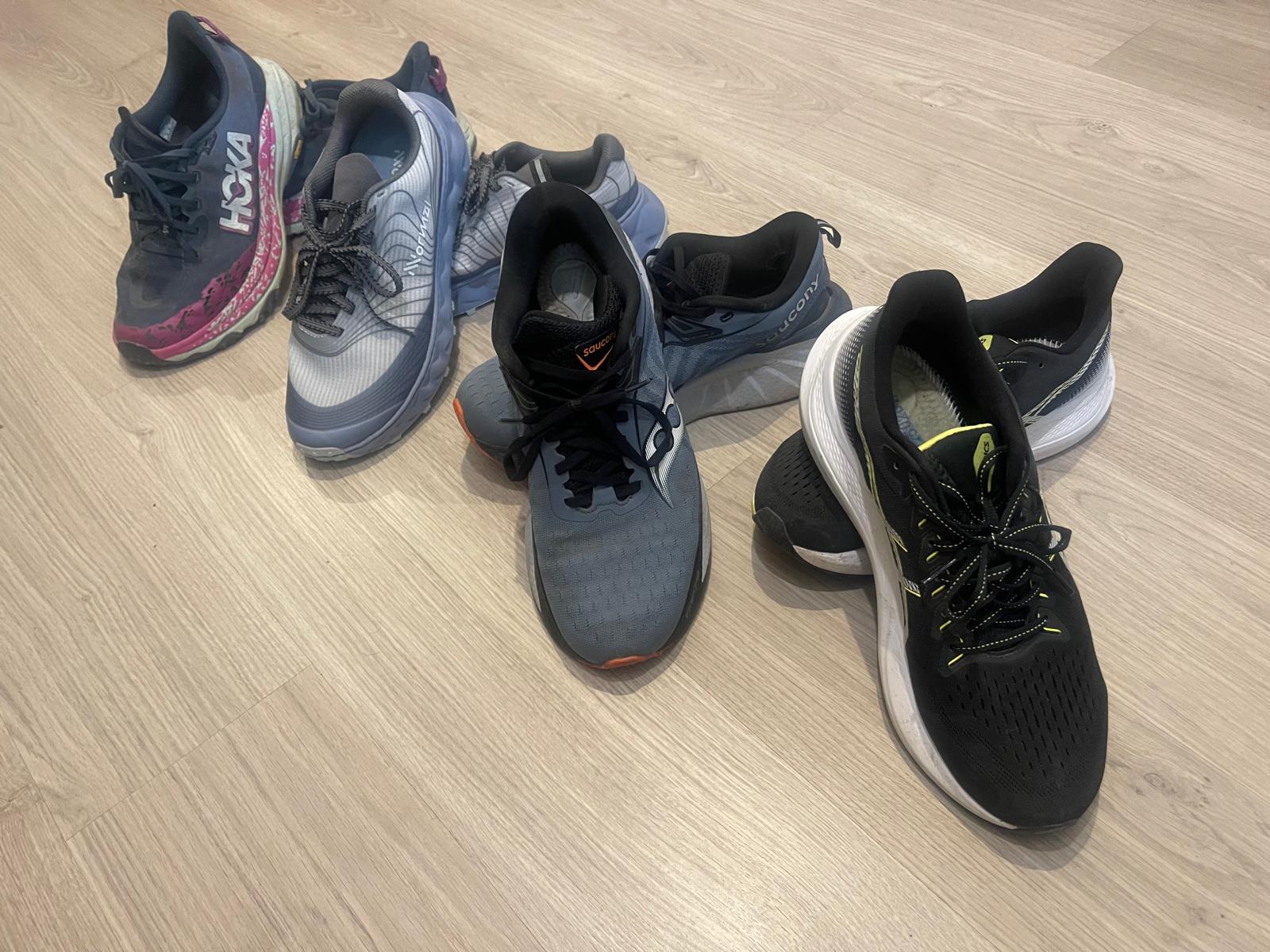
My Current Shoe Rotation
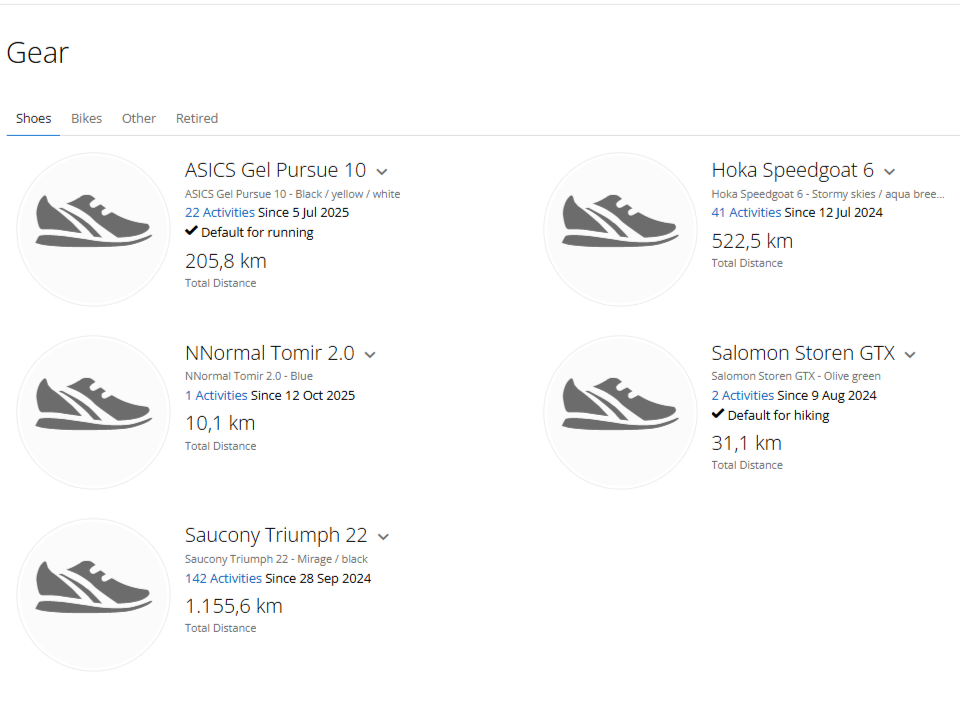
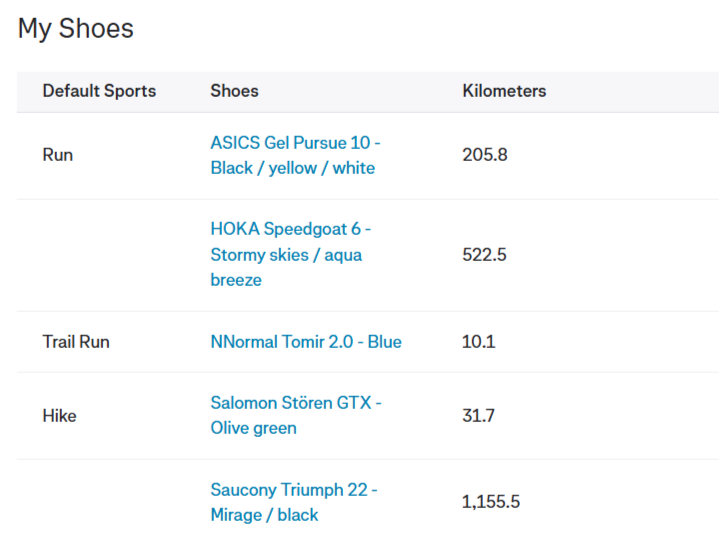
Saucony Triumph 22 – Over 1,100 km and still incredibly comfortable. The PWRRUN+ cushioning holds up beautifully.
Asics Gel Pursue 10 – My pick for faster runs. Over 200 km in, still snappy and responsive.
Hoka Speedgoat 6 – Trail-specific. Over 500 km and going strong. The aggressive tread grips technical terrain perfectly.
NNormal Tomir 2.0 – My new trail shoes. Just a few kilometers in so far, but ready to see how they perform on technical mountain terrain.
Road vs Trail Shoes: When Each Matters
Start with road shoes — most beginners run on pavement or well-maintained paths.
Add trail shoes once you’re running regularly on dirt trails, rocky paths, or forest terrain. Trail shoes offer grip and protection; road shoes focus on cushioning and smooth transitions.
The Real Cost
Expect to spend €130–160 on running shoes, gait analysis included. It’s not cheap, but it’s the most important investment you’ll make.
Skip the bargain pairs from general sports stores — they may look fine but often lack the structure your joints need over hundreds of kilometers.
Tip: Bring your insoles (if you use any) to your gait analysis. The expertise of a specialty store will save you pain, injuries, and wasted money.
Chapter Summary: | Gait analysis is essential. Bring your insoles if you wear them. Invest in quality running shoes (€130–160) that match your biomechanics. Start with road shoes; add trail shoes as your routes change.
2. When to Replace Your Shoes (The Real Story)
Here’s what nobody tells you: running shoes don’t just “die” at 500–800 km like everyone claims.
My Saucony Triumph 22 has passed 1,100 km and is still my daily go-to. My Hoka Speedgoat 6 already has 500 km and still feels great on trails.
What Actually Happens
Cushioning breaks down over time, but that doesn’t mean your shoes are suddenly useless — they just feel different.
When I only had my old Decathlon shoes and the Brooks Ghost 15, I used the Brooks Ghost 15 almost every day. Looking back, I probably didn’t let the foam decompress properly, which may have sped up their wear and contributed to my knee pain.
Now I rotate shoes based on feel and purpose, not mileage.
Pay attention to:
- How they feel during runs (trust your body)
- Visible wear on the outsole
- Any new aches or discomfort
- Reduced cushioning on impact
When a pair starts feeling flat, I keep it for short, easy runs — still useful, just not for long distances.
The Rotation Strategy
Since I started rotating multiple pairs, my shoes last longer and feel better. Different models stress your body slightly differently, which helps prevent overuse issues.
Having 2–3 pairs in rotation means:
- Each pair gets recovery time between runs
- You can match shoes to the workout (easy runs, long runs, trails)
- No panic when one pair wears out
Track Your Shoe Mileage
Both Garmin Connect and Strava let you track distance per shoe — it takes less than a minute to set up.
Tip: Trust how your shoes feel, not just the mileage number. Some fade around 600 km, others stay strong beyond 1,000 km. Rotating several pairs extends their lifespan and keeps your legs fresher.
Chapter Summary: | Replace shoes based on feel, not arbitrary mileage limits. Rotate 2-3 pairs to extend lifespan and prevent overuse injuries.
3. Running Clothes and Essential Accessories
I started in cotton t-shirts and cotton socks. For short runs, it worked fine. Then I tried a longer run in the heat – soaked, heavy, chafing after 20-30 minutes.
That’s when I learned: technical clothing isn’t necessary to start, but it makes running significantly more comfortable.
Socks: My Progression
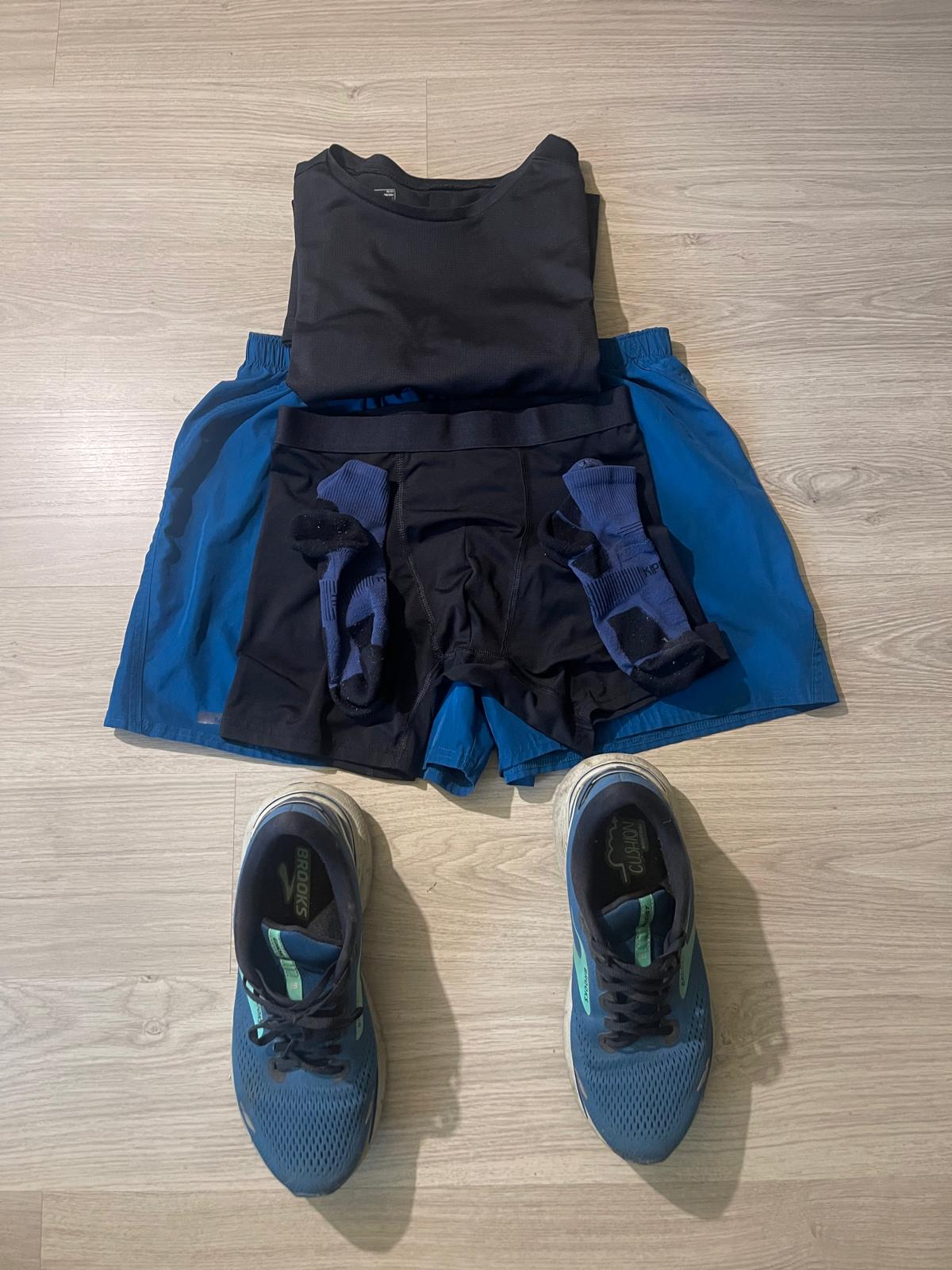
Kiprun socks from Decathlon – I still use these regularly. They work perfectly well.
Injinji Trail Midweight Toe Socks – Looked weird, felt strange initially, but eliminated blisters completely on long runs. Each toe separated prevents friction. Game-changer for half marathon training, especially on trails.
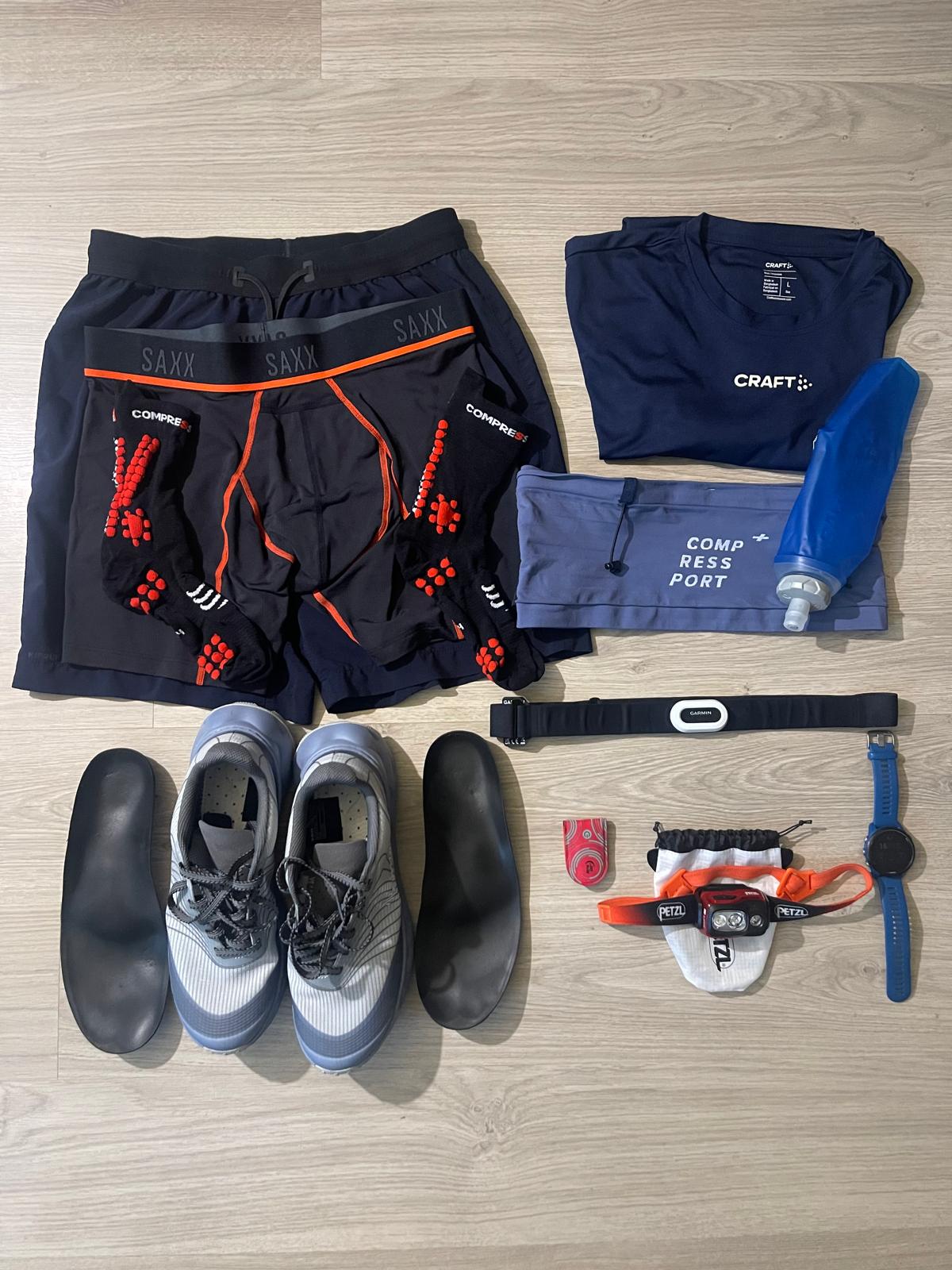
Compressport Pro Racing V4.0 Trail Socks – Added for longer runs. Higher support and breathability.
A quick note on sock length: I recommend longer socks for trails. Short socks let dirt jump in as you run, which gets uncomfortable fast.
The Underwear Real Talk
Wrong underwear ruins runs. Cotton causes chafing, which can turn even moderate-distance runs uncomfortable.
Started with Decathlon running boxers, then switched to Saxx Kinetic Sport Boxers – Light-Compression Mesh and Danish Endurance for longer runs. Look for seamless designs – worth every euro.
Technical Clothing Basics
Look for moisture-wicking fabrics (polyester or nylon blends) instead of cotton. Decathlon’s Kiprun line offers everything you need: technical shirts, running shorts, and thermal layers.
I still wear Decathlon basics for most runs. Save premium brands for specific needs.
For ladies, a sports bra is not negotiable. Support and comfort are crucial to prevent discomfort and injury, no matter your running level.
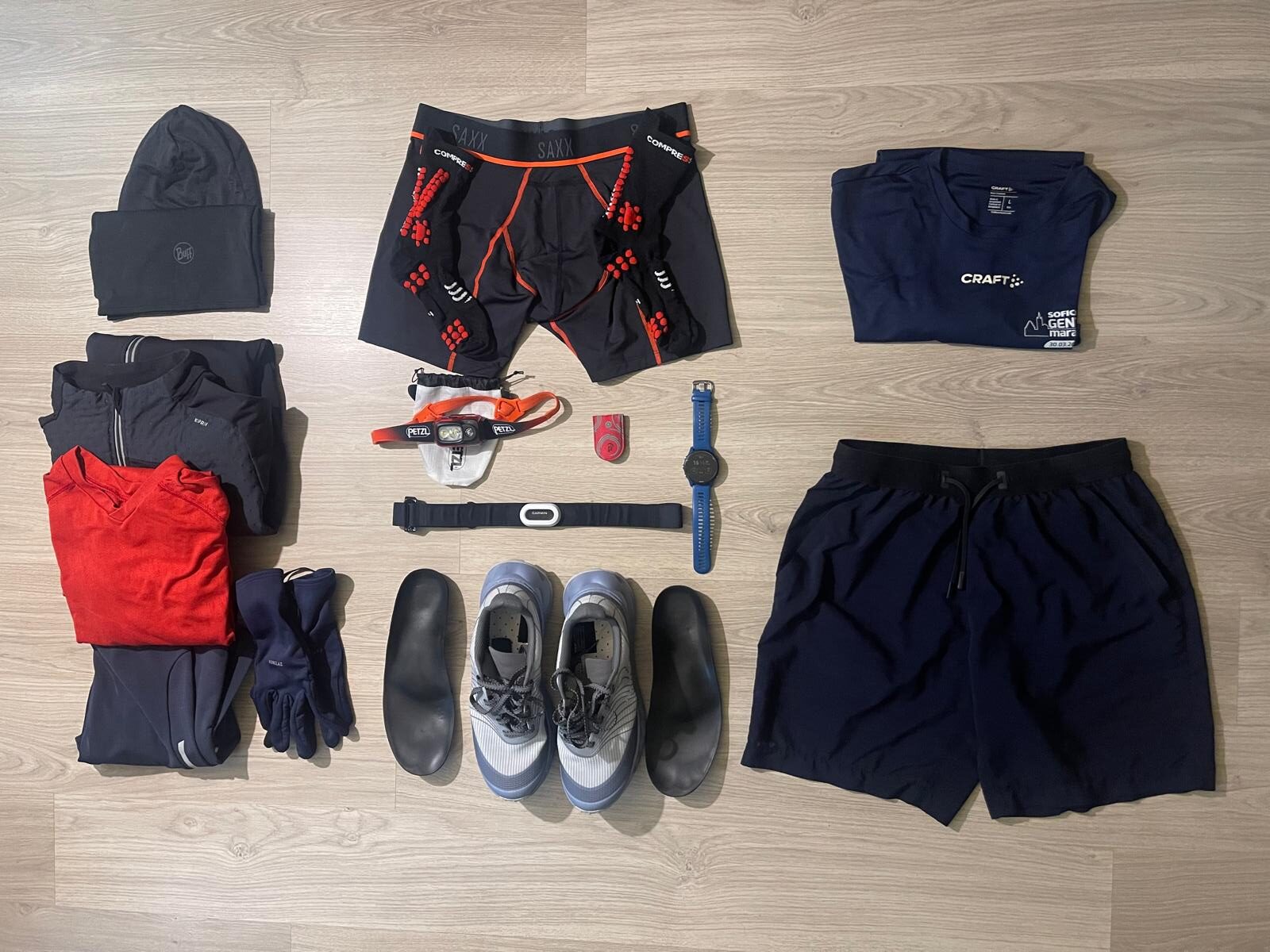
Tip: Start with Decathlon technical basics. Invest in good socks and underwear – they prevent problems that derail consistency.
Bonus Tip: Choose clothes that are machine washable — it’ll simplify your life. When washing jackets or anything with zips, always close the zips before tossing them in the machine. I’ve had to replace zips more than once just because I didn’t pay attention. It’s a small habit that saves gear and money.
Important: Don’t wash your hydration vest in the washing machine. Hand wash it only. There are simply too many straps, clips, and mesh elements that can get torn or damaged in the machine. A gentle hand wash keeps it functional and lasting longer.
Chapter Summary: | Technical fabrics improve comfort on longer runs. Decathlon offers excellent value. Prioritize socks and underwear – they matter more than you’d expect.
4. Running Watches: My "Cheating" Story
I had a plan: run a 10K race, reward myself with a running watch.
Then a friend showed me his Garmin Fēnix 6 with built-in training plans.
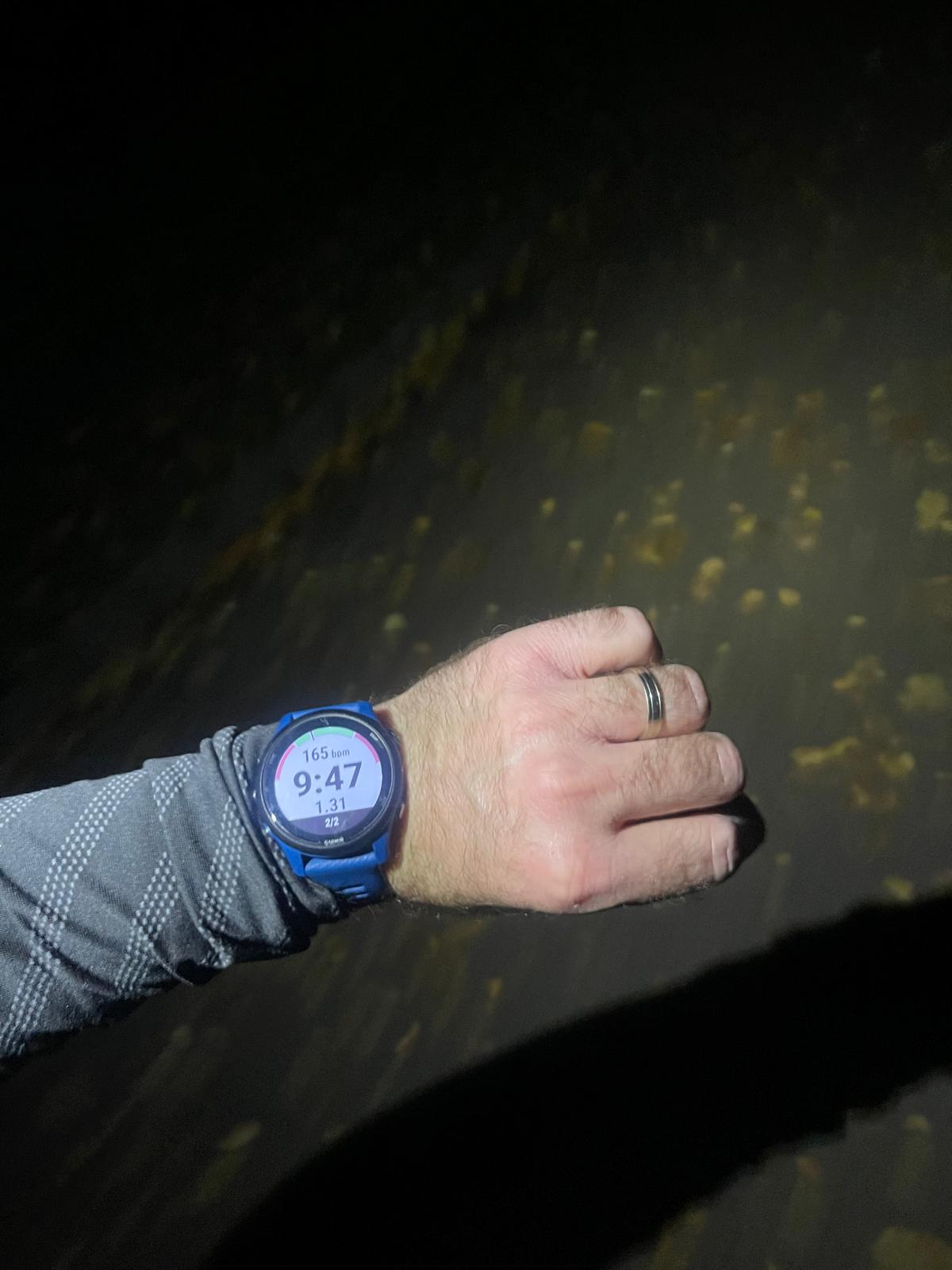
I bought the Garmin Forerunner 255 before the race. Best running purchase I’ve made.
Can You Run Without a Watch?
Absolutely. Use your phone with Strava or another free app. Many runners do this successfully.
Why I Got the Watch Anyway
The Garmin Forerunner 255 gave me structure:
- Adaptive training plans based on my fitness
- Interval coaching with prompts during runs
- Data tracking without carrying my phone
- 14-day battery life in smartwatch mode, 5 days in GPS mode
Essential Watch Features
If considering a GPS watch, these actually matter:
- Accurate GPS tracking
- Heart rate monitoring
- Training guidance
- Multi-day battery life
- Breadcrumb maps for navigation
Don’t buy the most expensive watch, but still think ahead of what you’ll expect it to do for you long-term, even if you need to “grow up” to some features. Trail running wasn’t on my radar when I started. But I chose a watch with simple map functionality anyway – turned out to be a smart move.
Heart Rate Monitoring
I bought the Garmin HRM-Pro Plus chest strap to use Garmin’s adaptive plans based on heart rate, and to get more accurate information about my heart rate zones. Using the threshold test with the strap, I was able to more accurately identify my zones, so the watch could recommend a better suited plan.
My recommendation: Start with phone + free app if testing whether running sticks. Get a GPS watch once committed to building consistency – the structure helps maintain momentum.
Chapter Summary: | You don’t need a watch to start. However, the right watch adds structure and convenience that helps maintain consistency without carrying your phone.
5. Hydration: When You Need It (And My Revelation)
I ran for months without carrying water. 5K, 10K, even longer runs – never needed it (at least that’s what I thought).
Half marathon training changed that. I bought my first hydration vest and finally brought water on a run. That first run with water changed everything.
My energy stayed consistent. My focus remained sharp. Recovery improved. Simply drinking water during runs made a massive difference.
If I’d known earlier how much hydration mattered, I would’ve started sooner.
When to Carry Water
You probably don’t need it for:
- Runs under 60 minutes in moderate weather
- Easy-paced neighbourhood runs
- Cool morning sessions
You should carry water for:
- Runs over 90 minutes
- Hot/humid conditions
- Trail runs far from water sources
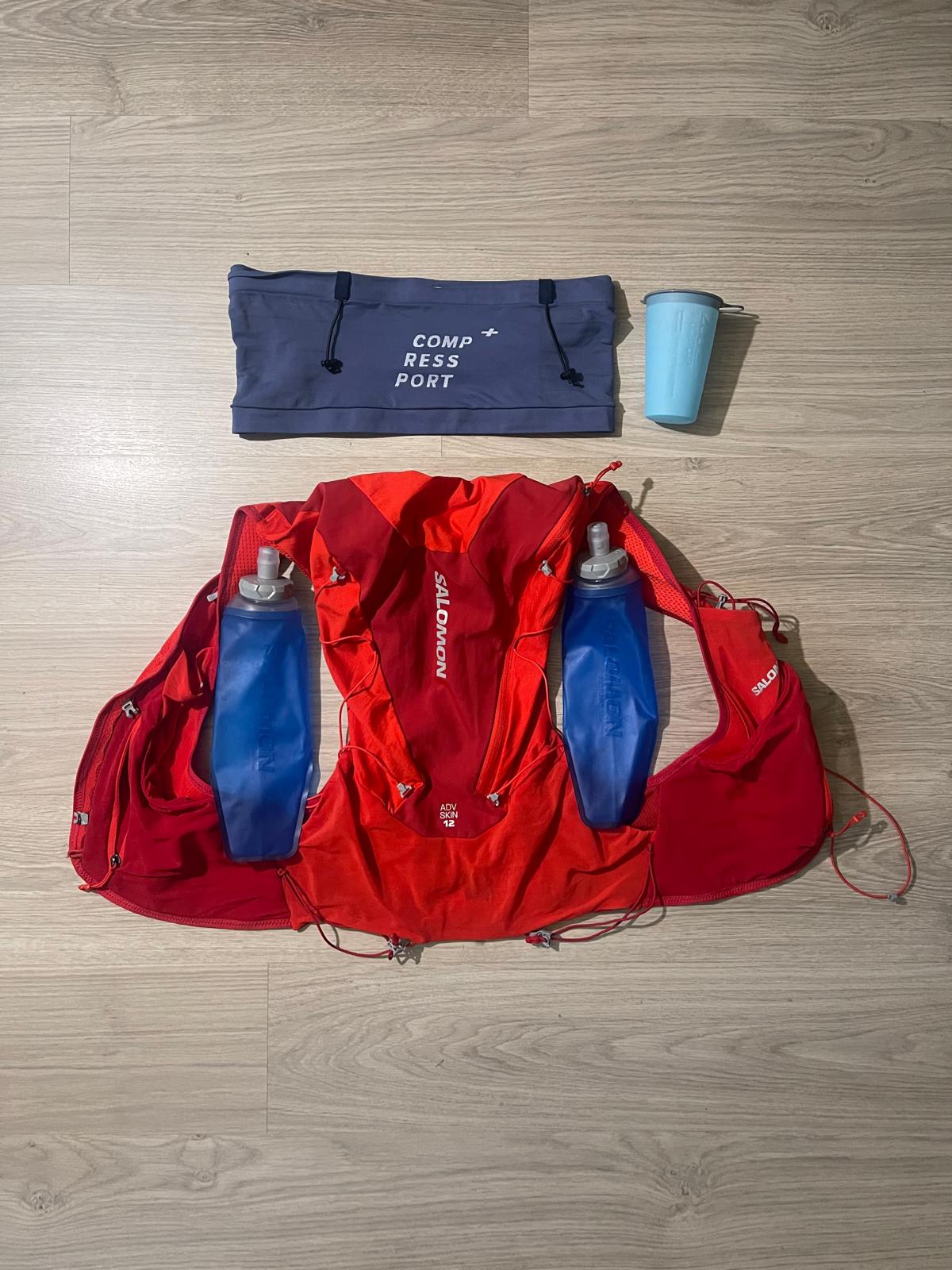
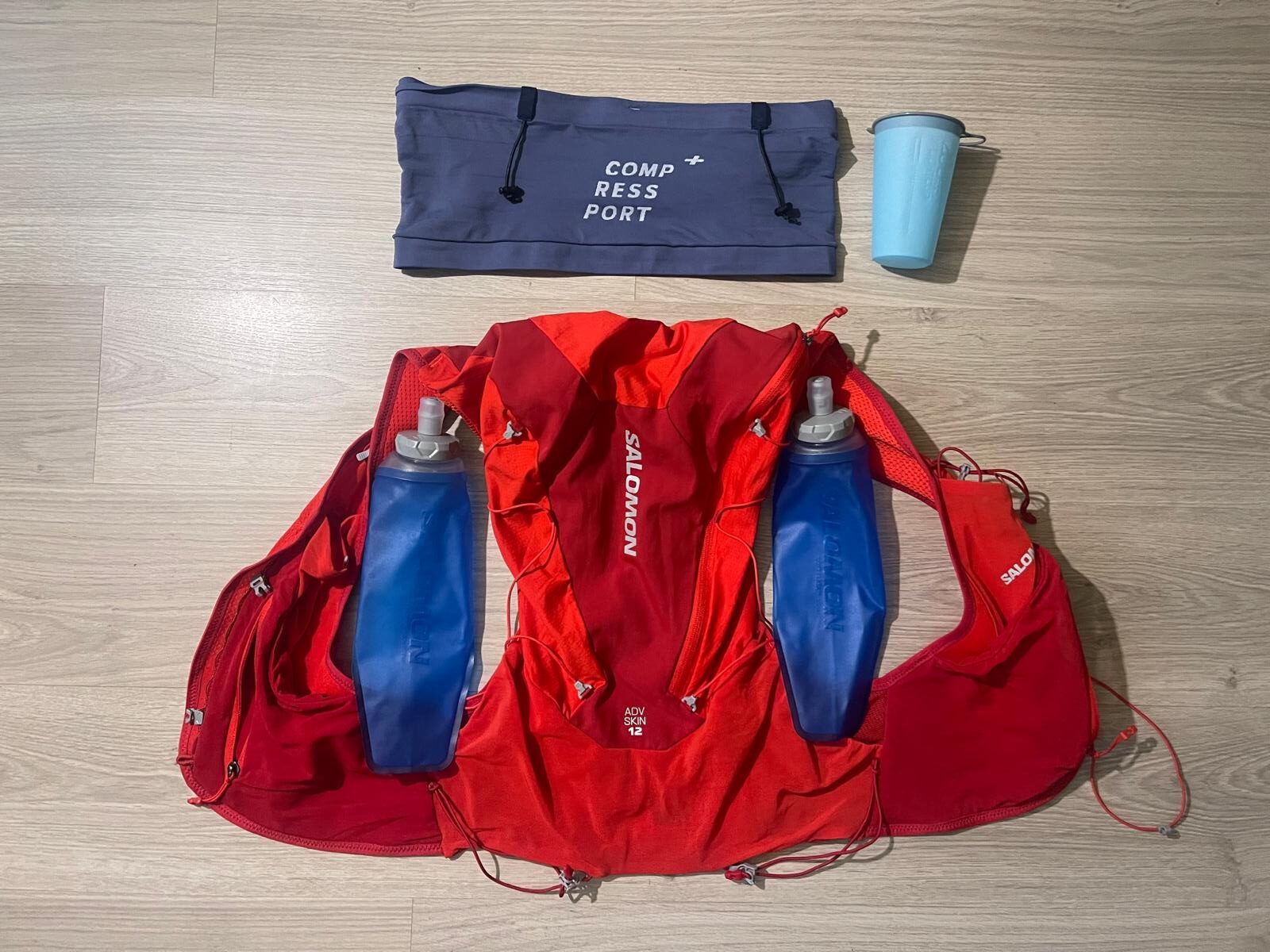
My go-to hydration setup — belt or vest depending on distance, with soft flasks and a foldable cup.
Running Belts: Starting Simple
Decathlon running belt – My first belt. I bought it for my phone, but as I progressed and started bringing water, I used it with the 250 ml soft flask from my Evadict 5L vest for shorter runs. Budget option that works.
Compressport Free Belt Pro – Holds more than one 500 ml soft flask. But if I need more than one flask, I take my running vest with me.
Hydration Vests
Evadict 5L by Decathlon – One of my current vests. I even used it for my first marathon. Includes two 250 ml soft flasks plus a 1-liter bladder. Multiple pockets for gels, phone, and keys. Incredible value for exploring longer distances.
Salomon Advanced Skin 12L – My preferred vest now. I’m using it with two 500 ml soft flasks, but it can hold a bladder as well. For convenience of refilling during races, I prefer not to use a bladder.
Capacity Guide
The capacity you need depends on distance and how much stuff you want to carry:
Under 15K: Belt with one flask or nothing 15-25K: Small vest (5L) with flasks 25K+: Vest with additional capacity
I prefer soft flasks in front pockets – easy to refill and monitor how much I’m drinking.
Tip: Test hydration setup during training runs. Don’t try new gear on race day.
Chapter Summary: | Start without hydration for short runs. Add a belt for 10-15K. The Evadict 5L vest offers excellent value for longer distances. The Salomon Advanced Skin 12L provides more capacity and comfort for marathon distances and beyond.
6. Specialized Gear: Headlamps and Running Poles
Most runners never need specialized gear. But if you’re running early mornings or exploring trails, here’s what’s actually useful.
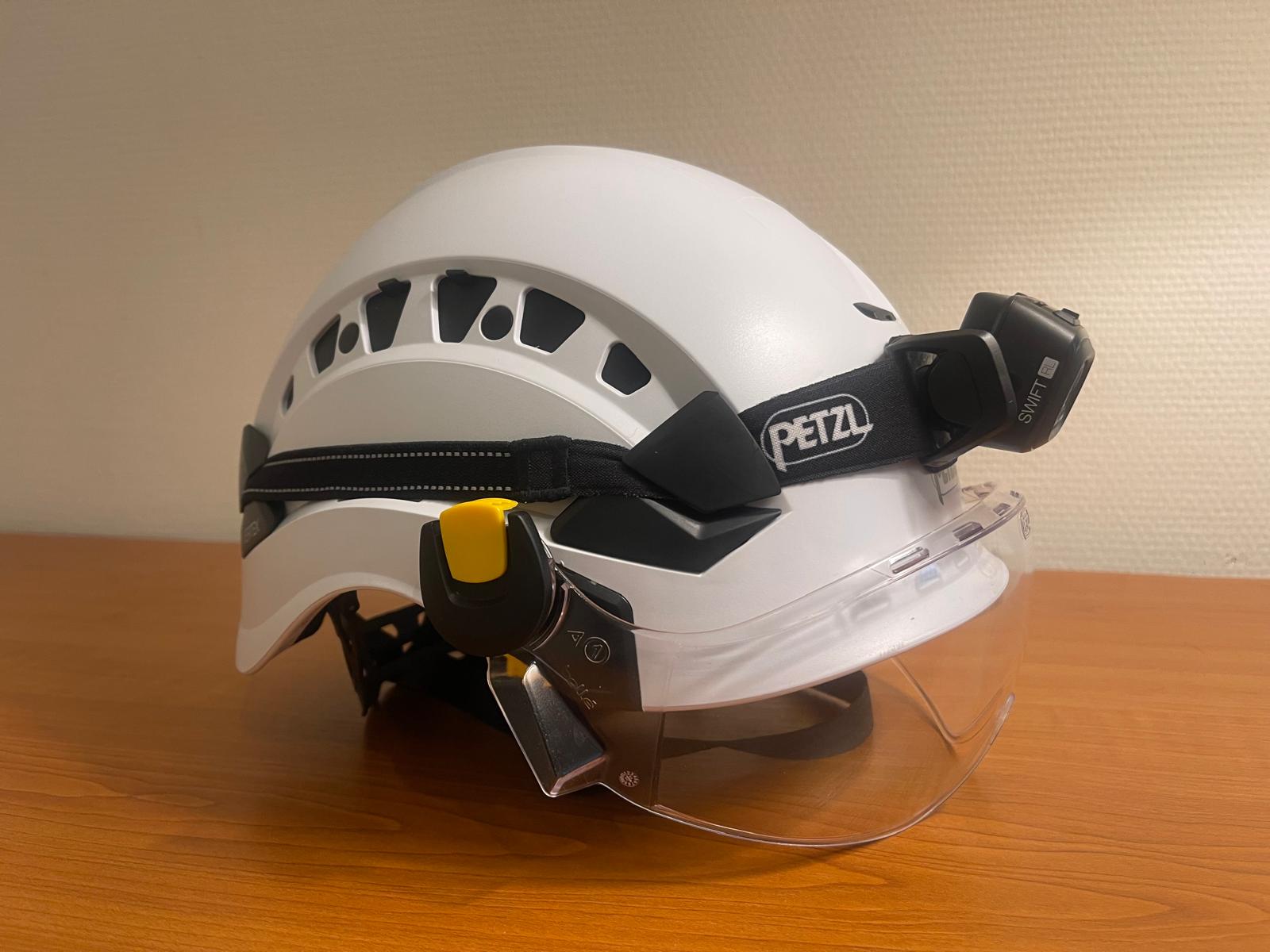
Night run visibility test with Petzl Swift RL 1100.
Headlamps for Dark Running
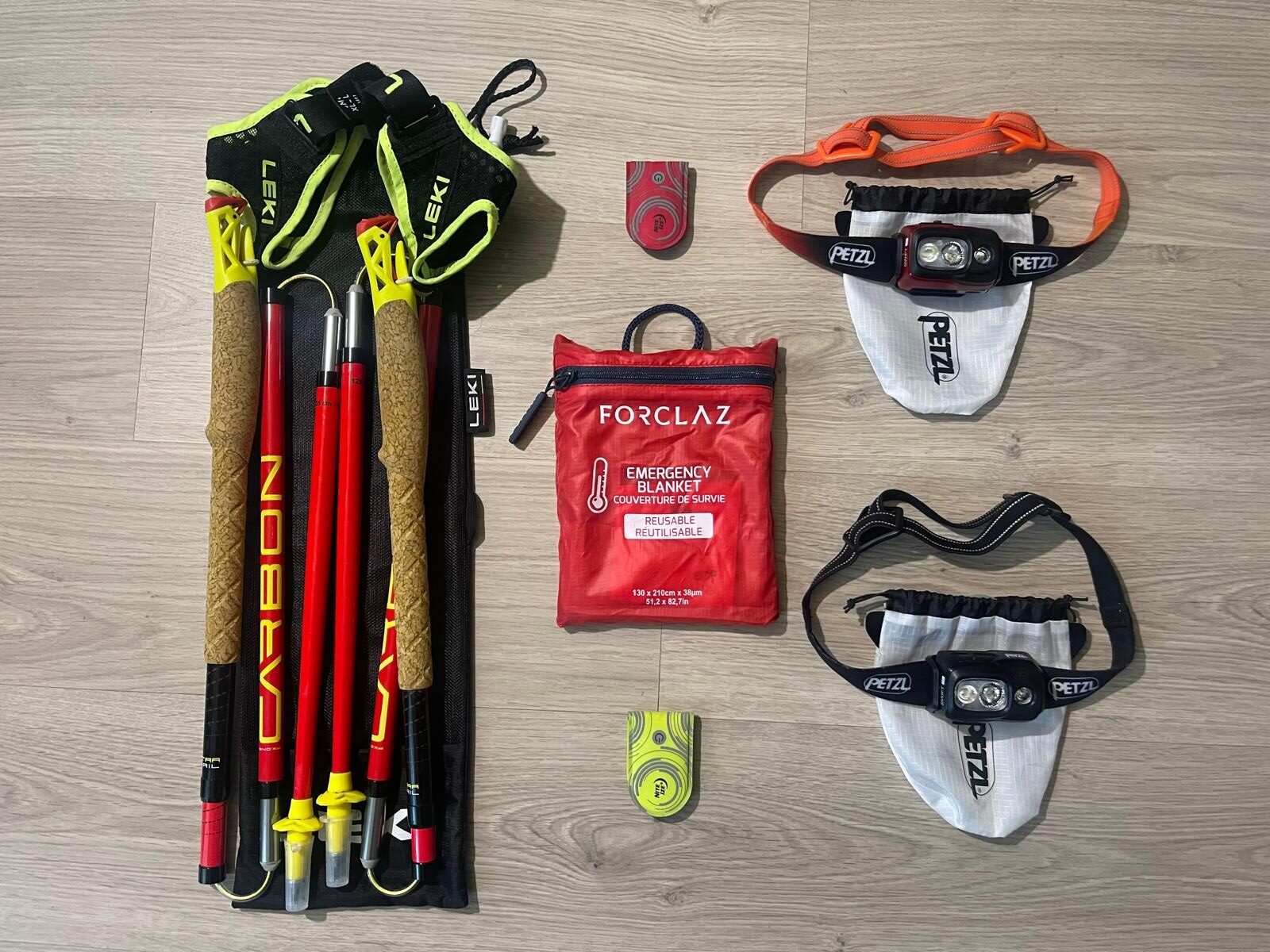
Petzl Swift RL 1100 – I own two. One for running and one for my work (compatible with my Petzl Vertex Vent Helmet). It also happened before that my usual one wasn’t charged and needed a backup. Considering my long-term goal, I invested in good quality head torches.
Budget alternative: Cheaper Petzl models or Amazon options work fine for occasional early morning or late evening road runs. You don’t need 1100 lumens for neighbourhood streets.
When you need a headlamp:
- Running before sunrise / after sunset regularly
- Trail running in forested areas
- Any running in low-light conditions
Running Poles
Leki Ultra Trail FX One – My poles for technical trails and longer mountain runs. They reduce strain on your legs during steep climbs and provide stability on descents.
Most road runners never need poles. Trail runners don’t need them for every run either.
When poles make sense:
- Long mountain runs with significant elevation
- Technical descents where stability helps
- Ultra-distance trail races
- Training specifically for races where you’ll use poles
Start without poles. Add them once you’re regularly running trails with serious elevation gain.
Safety Gear
Nite Ize TagLit Magnetic LED marker – Clip-on lights with good visibility. Essential for safety on early morning or evening road runs near traffic.
Forclaz Reusable Survival Blanket — takes almost no space but can make a huge difference in an emergency.
Tip: Safety gear isn’t exciting, but being visible prevents accidents if you run in low light.
Chapter Summary: | Headlamps are essential for dark running. Budget options work for roads, invest in powerful models for trails. Running poles help on technical mountain terrain but aren’t necessary for most runners.
7. Building Your Gear Collection: Budget Strategy and Lessons Learned
Here’s what I’d tell myself starting out after 3,000+ kilometers.
Priority Investment Order
Priority 1: Running Shoes (€130-160 with gait analysis) Non-negotiable. Everything else can wait.
Priority 2: Good Socks (€6-25) Prevent blisters. Cheap upgrade, massive difference.
Priority 3: Technical Shirt and Shorts (€8-25) Decathlon works perfectly. Just get moisture-wicking fabric.
Priority 4: Sport Underwear (€6-40) Comfort matters on longer runs.
Priority 5: GPS Watch (€0-300) You won’t use all the functions on expensive models yet. Start with free apps, upgrade when committed. Structure helps consistency.
Everything Else: Add as your running demands it.
My Reward System
I earned upgrades with milestones:
- First 5K: Proper running shoes with gait analysis
- Consistent 3 months: GPS watch (okay, I cheated slightly)
- First successful 10K race and halfway through half marathon training: Hydration vest
- 1,000 km: Premium running shoes
This kept me motivated and prevented buying gear I didn’t need yet.
Mistakes I Made
Ignored sock importance: Thought socks didn’t matter. Paid for it in blisters during my first runs in the heat.
Ran too long in worn-out shoes: My Brooks Ghost 15 felt okay at 1,300 km, but I should’ve transitioned them to easy-run-only duty earlier. Contributed to knee discomfort.
Skipped the rotation strategy initially: Running in the same shoes every time creates repetitive stress. Rotating pairs helps prevent overuse issues.
The Real Rule
Start minimal. Earn upgrades through consistency. Buy based on real needs, not marketing hype.
I wasted money buying things too early. Now I wait until I actually need something before spending.
Chapter Summary: | Invest in shoes and socks first. Build gradually based on actual needs. Rotate multiple shoe pairs. Learn from experience rather than buying everything upfront.
8. Running Gear FAQ
Q: Do I really need a gait analysis for my first running shoes?
A: Yes. It’s usually included in the €150 shoe price and prevents injuries that cost far more in the long run. If you wear insoles, bring them to the analysis.
Q: When should I replace my running shoes?
A: Trust how they feel, not arbitrary mileage numbers. Watch for reduced cushioning, visible outsole wear, or new aches during runs. Some shoes fade at 600 km, others go strong past 1,000 km.
Q: Can I start running in regular athletic clothes?
A: Yes, for short runs. But technical fabrics make longer runs significantly more comfortable. Prioritize socks and underwear first – they prevent blisters and chafing.
Q: Do I need a GPS running watch?
A: No. Start with your phone and free apps like Strava. Add a watch once you’re committed to running consistently – the structure and convenience help maintain momentum.
Q: When do I need to carry water during runs?
A: Generally not needed for runs under 60 minutes in moderate weather. Start carrying water for runs over 90 minutes, in hot/humid conditions, or on trails far from water sources.
Q: How do I know if running gear is worth the investment?
A: Ask yourself: Does this solve a problem I’m actually experiencing? If you haven’t identified the problem through running, you probably don’t need the solution yet.
Chapter Summary: | Common beginner gear questions about shoes, clothing, watches, and hydration all have the same answer: start simple, add strategically, and let your actual running experience guide purchases.
9. Conclusion: Start Simple, Build Smart
When I restarted running, I thought I needed everything immediately. The truth? I needed proper shoes, proper socks and consistency.
Everything else came later – added strategically as my running demanded it.
The Minimalist Beginning:
- Get a gait analysis
- Buy proper running shoes
- Add basic technical clothing
- Start running consistently
The Progression Path:
After 2-3 months of consistency:
- Add a GPS watch for structure
- Get a hydration system for longer runs
- Rotate multiple shoe pairs
- Replace shoes based on feel, not mileage alone
Your gear collection should reflect your actual running journey, not aspirational plans.
Check out my complete current gear list for specific products and updates.
One Action Step:
Schedule a gait analysis at your local running store. Most include it with shoe purchase around €150. Thirty minutes that prevents months of potential problems.
Chapter Summary: | Start with shoes and basics. Build your collection as running demands it. Quality where it matters, budget-friendly for the rest, earned through consistency.