
This post contains affiliate links. If you click and buy, I may earn a commission at no extra cost to you. I only recommend brands and products that I personally trust and believe in.
1. More Than Just Another Running Year
Table of Contents
ToggleIf 2023 was about building consistency, and 2024 was about increasing volume, then 2025 became something different entirely.
It wasn’t just about running more.
It wasn’t about chasing races.
And it definitely wasn’t about blindly following a plan anymore.
2025 was the year things started to click.
Not in a perfect, linear way — but in a way that forced me to pay attention.
For the first time since I started running, I wasn’t just executing training.
I was questioning it.
Adjusting it.
Trying to understand why things worked — and why they didn’t.
I didn’t stop using plans.
But I stopped following them blindly.
Instead, I started listening — to my body, to the data, and to the outcomes of my own decisions.
Sometimes I got it right.
Sometimes I didn’t.
But every time, I learned something.
And that’s what made 2025 different.
Not the races.
Not the kilometers.
But the shift from relying on structure… to taking responsibility.
This is the year I stopped following — and started deciding.
If you’re just starting, I wrote a full beginner guide here → How to Actually Start Running: A Beginner’s Guide
2. The Numbers Still Matter
Even if 2025 wasn’t defined by numbers, they still tell an important part of the story.
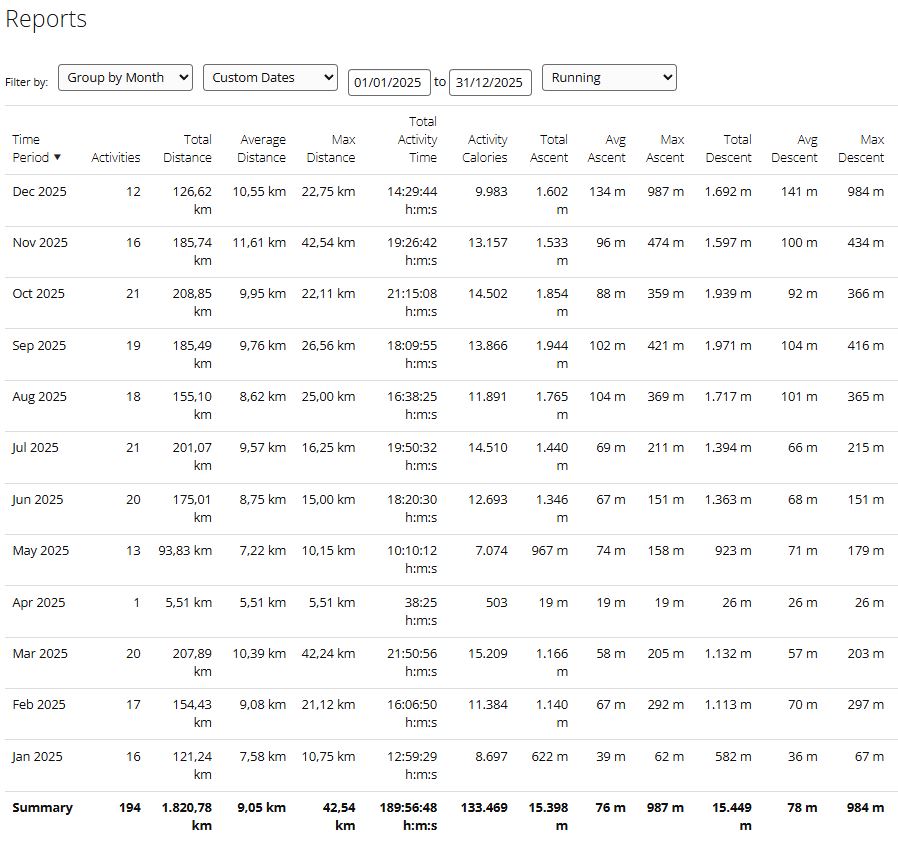
- 1820.78 km run (goal: 1800 km — achieved);
- 15,398 meters of elevation gain;
- Longest run: 42.54 km;
At the start of the year, that 1800 km goal wasn’t just a target — it was a commitment.
A way to make running consistency part of my identity.
And despite:
- a full break in April due to surgeries;
- injuries and imbalances during the year;
- adjustments in both training and nutrition;
…I still got there.
Not perfectly. Not in a straight line. But consistently enough.
What mattered even more than the total was how that volume was distributed.
October became my biggest month, with 208.8 km.
And in total, I had three months above 200 km.
A couple of years ago, that would have sounded unrealistic.
Now, it became repeatable.
And that’s what builds long-term progress in marathon training and trail running.
Because taking ownership didn’t mean overcomplicating everything.
It didn’t mean losing discipline.
It meant keeping the structure…
while learning when to adapt it.
3. When the Body Forces You to Pay Attention
But while the structure was improving — my body was starting to push back.
In 2024, I mentioned an issue with skin hardening on the ball of my left foot (see the full story here).
In 2025, it became impossible to ignore.
The discomfort got worse to the point where I couldn’t properly push off with my left foot anymore.
Without even realizing it at first, I started to compensate.
I shifted my weight.
I adjusted my stride.
I tried to protect that area.
And like it always does, that compensation came at a cost.
What started as a localized issue quickly turned into something bigger.
My gait changed.
Load distribution shifted.
And that imbalance started to travel up the chain — eventually leading to Achilles issues.
At one point, I had flipped the imbalance completely.
That was a turning point.
The body doesn’t fix problems. It moves them.
Eventually, I understood the root cause.
It wasn’t just skin hardening. It had developed into a wart — and it needed to be frozen off.
It sounds small.
But it changed how I ran.
And because it changed how I ran — it affected everything.
Small issues don’t stay small if you ignore them.
They adapt.
They spread.
They force you to adjust.
And if you don’t take control early, your body will make the decision for you.
4. From Feeling to Understanding
For a long time, I felt that something wasn’t right.
I didn’t need data to notice it.
I could feel the imbalance.
I knew I was protecting my left foot.
I could sense my stride wasn’t natural anymore.
But feeling something and understanding it are two very different things.
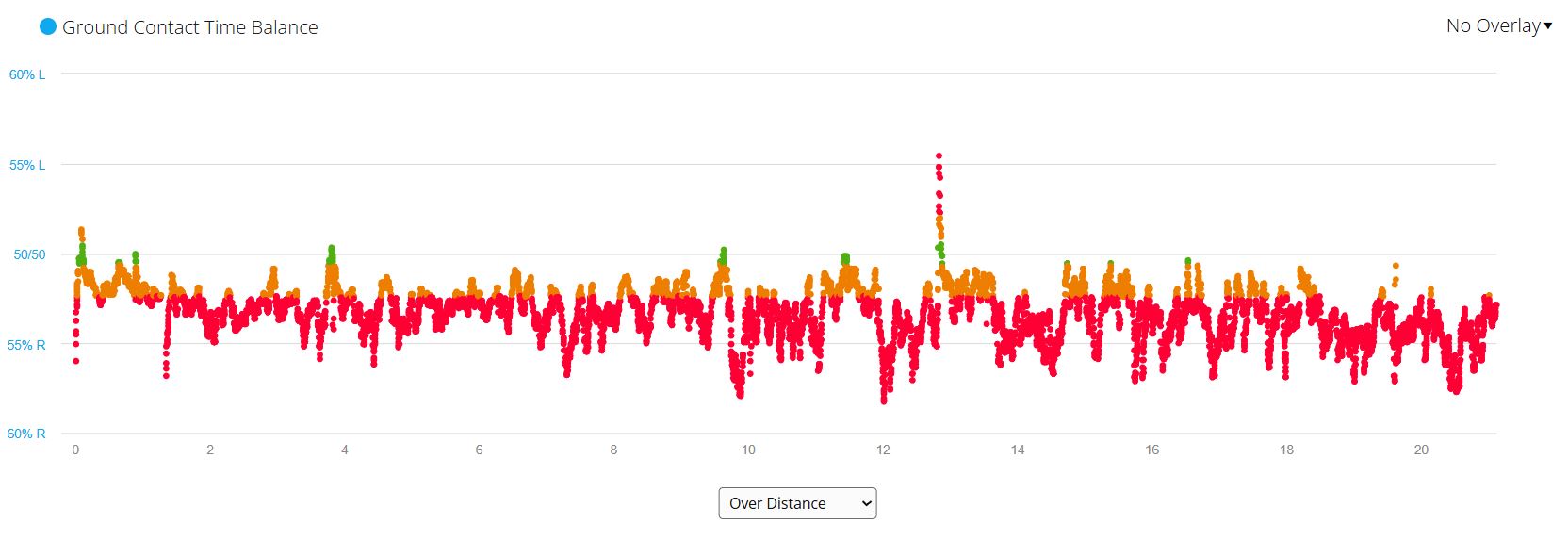
That changed when I started using the Garmin HRM-Pro Plus, which provides running dynamics data.
For the first time, I could actually see what I had been feeling.
The numbers showed a clear imbalance between left and right.
A small difference is normal.
This wasn’t small.
It confirmed what I already suspected:
I wasn’t running symmetrically anymore.
And that confirmation mattered more than I expected.
Not because it told me something new —
but because it removed doubt.
It gave structure to intuition.
I started to understand the difference between:
- normal fatigue and warning signs;
- temporary discomfort and structural issues;
- pushing through and pushing too far;
This didn’t happen overnight.
It came from time, mistakes, and paying attention.
Because data can guide you.
But it only becomes useful when it aligns with what you feel.
That’s when you stop guessing — and start making better decisions.
5. Training Evolution: From Following to Adjusting
Noticing what my body was telling me was one thing.
Acting on it was something else entirely.
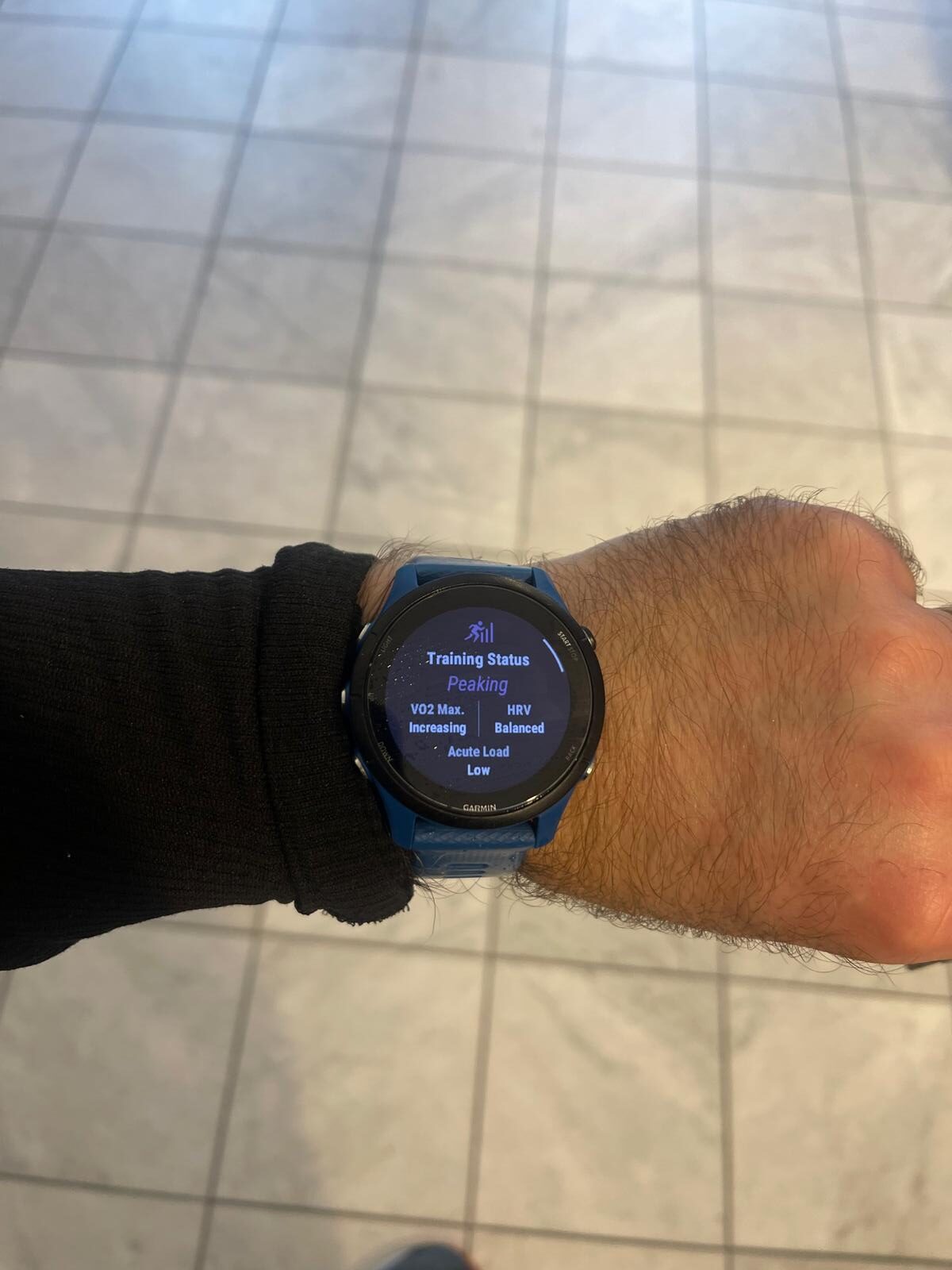
I was still using structured plans — mainly Garmin Coach.
They helped me build consistency.
They helped me prepare for road races.
They gave me structure when I needed it most.
But as I moved more into trail running and elevation, I started to feel their limitations.
Because once elevation enters the equation, everything changes.
Pace becomes less relevant.
Effort becomes harder to quantify.
Terrain becomes unpredictable.
I didn’t stop using plans.
But I stopped treating them as something I had to follow exactly.
Instead, I started adjusting.
If I felt excessive fatigue — I adapted.
If terrain didn’t match — I modified.
If something felt off — I listened.
Not perfectly.
But more consciously.
For the first time, the plan was no longer in control. I was.
And that came with responsibility.
It meant accepting mistakes.
Learning through trial and error.
Owning both good and bad decisions.
Because following a plan can take you far.
But understanding it is what lets you go further – and keep going.
6. Setbacks That Moved Me Forward
Not every step forward in 2025 came from training.
Some of the most important progress came from moments when I had no choice but to slow down, adapt, or completely step away. At the time, these moments felt like interruptions.
Looking back, they were necessary.
They forced me to think differently, to plan better, and to take a longer-term view of my running.
April Reset
April was a complete break from normal training.
I had planned two medical procedures close to each other:
- a lipoma removal from my abdomen;
- a septoplasty, to correct a deviation that was limiting my breathing capacity;
The idea was simple: group them together strategically, so I wouldn’t lose training twice during the year.
Even with that planning, the impact was real.
For about four weeks, my training was suspended. My routine was broken, and I could feel the effects quickly — not just physically, but mentally as well.
I gained some weight during that period, which wasn’t surprising given the drop in activity.
At the time, it felt like a setback.
But in hindsight, it was also a reset.
It reminded me that progress isn’t just built during training — it also depends on how you handle the moments when you can’t train.

VO2 Max Test (Reality Check)
In August, I decided to get a VO2 max lab test.
Not because I expected a big surprise — but because I wanted clarity.
The results confirmed what I already suspected:
- the need to lose some weight;
- the importance of building more muscle;
- and the necessity to fix the imbalance between my feet;
Additionally, I found out that my baseline metabolic need is around 2000 kcal per day;
There was nothing shocking in those conclusions.
But seeing the numbers made it real.
It gave structure to things I had felt intuitively for a while.
From that point on, my decisions weren’t just based on feeling — they were supported by data.
Strategic Body Maintenance
Another important decision came toward the end of the year.
Back in early 2023, after several tests and discussions with an orthopedic specialist, I had hyaluronic acid injections in my knees.
So, in December 2025, I planned to do it again.
This wasn’t reactive.
It was proactive.
Initially, the recommendation was clear: no exercise for two weeks.
But we adapted:
- 48 hours without activity;
- gradual return with stationary bike;
- then back to running;
Even with that flexibility, I didn’t rush it.
I waited almost two weeks before running again.
Ownership isn’t just about pushing harder. It’s about knowing when to hold back.
Morning Breathing and Cold Showers
Alongside training, I also built a simple mental routine using the Wim Hof Method, done before anything else.
These sessions sharpened focus, reduced stress, and strengthened my mindset.
I also took cold showers after workouts — starting at 15–30 seconds and gradually increasing up to 2 minutes. Research shows two minutes is enough for physiological and mental benefits.
These showers and breathing sessions continued consistently up until before the Brussels Airport Marathon, helping me recover and maintain a strong mind during intense training and setbacks.
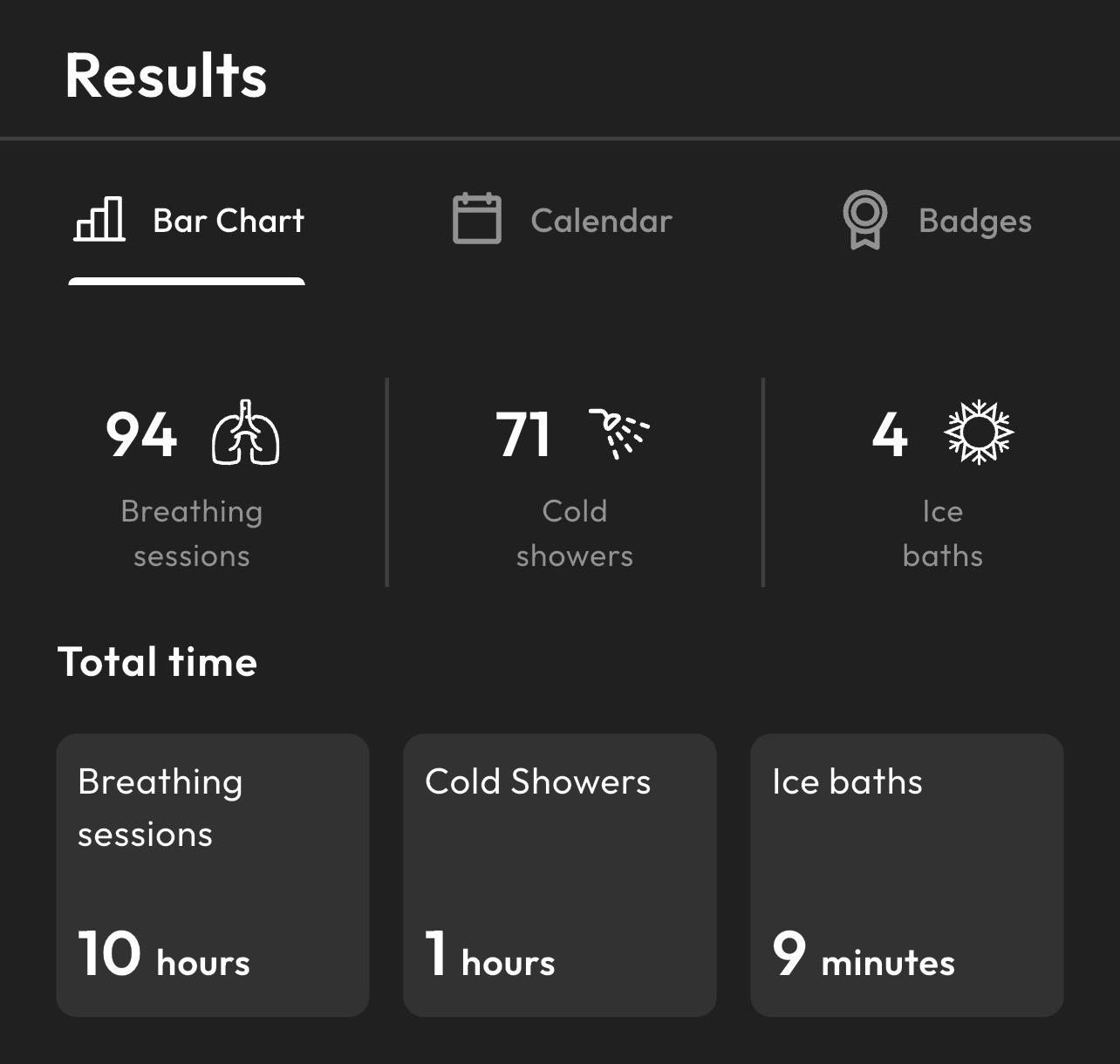
*Session durations are displayed in full hours only — minutes beyond the last complete hour are not included in the total shown.
7. Racing as Feedback: What My Body Told Me
Races in 2025 were not just goals.
They were checkpoints.
Moments where all the decisions I made — in training, recovery, and nutrition — came together and showed me the truth.
Because in a race, there’s no hiding.
The calm before the kilometers – animator, clapping, shouting, and pure start-line energy at the Brussels Airport Marathon 2025.
You Can’t Outrun a Calorie Deficit
In September, I ran the Europa Trail Brussels, a 27 km trail race.
- Watch distance: 26.56 km
- Elevation: 421 m
- Watch time: 2:48:51
This wasn’t my main goal race, but it was important: it officially put my name on the UTMB Index.
Completing it gave me confidence for longer distances and confirmed my training was on track, but I needed some adjustments.
My training load was high:
- 5 runs per week;
- 2 strength sessions;
- additional activity like walking with a weighted vest;
At the same time, I reduced my intake to ~2100 kcal.
The result was predictable.
Between August 19 and September 13:
84 kg → 80 kg.
On race day, first half felt strong.
Then everything changed.
I couldn’t run the ascents anymore.
It wasn’t fatigue.
It was energy.
You can’t demand endurance from your body if you don’t fuel it properly.
Fueling More = Running Better
After that race, I adjusted.
I started eating more.
Not excessively — just enough.
At the Semi Marathon de Nivelles on the 21st of September, I felt stronger, more stable, more in control.
- Watch distance: 21.21 km
- Watch time for the half marathon: 1:49:17
- Elevation: 232 m
New personal best.
Fueling is not just about recovery. It’s part of performance.
Respect the Marathon Distance
The Sofico Ghent Marathon (29th of March) was my first marathon.
Goals:
- don’t walk;
- sub 4h30;
Final stats:
- Distance: 42.24 km
- Watch time: 4:27:24
- Elevation: 205 m
Both goals achieved.
But after 30–32 km…
Everything changed.
Cramps. Fatigue. Slower pace.
And around me — runners everywhere. On the ground. Cramping.
It felt like a scene from a horror movie.
Finishing a marathon is not just about being fit.
It’s about preparation, pacing, fueling — and respect.
Performance and Joy Can Coexist
Even with the challenges, I didn’t forget something important.
To enjoy it.
During the race, I took photos.
Talked to people.
Even took a picture with someone dressed as Super Mario.
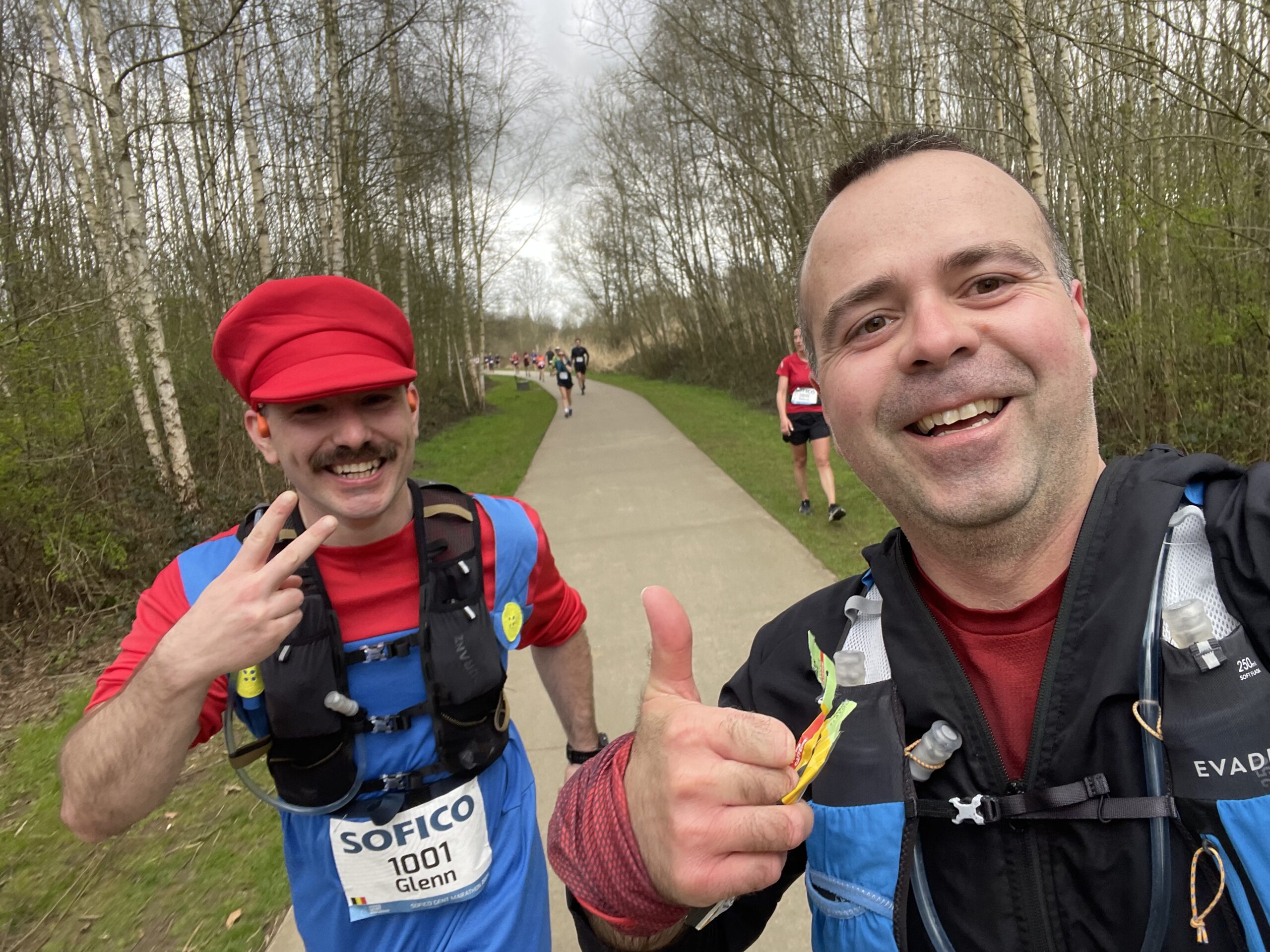
Because performance doesn’t mean losing joy.
You don’t have to choose between performance and fun.
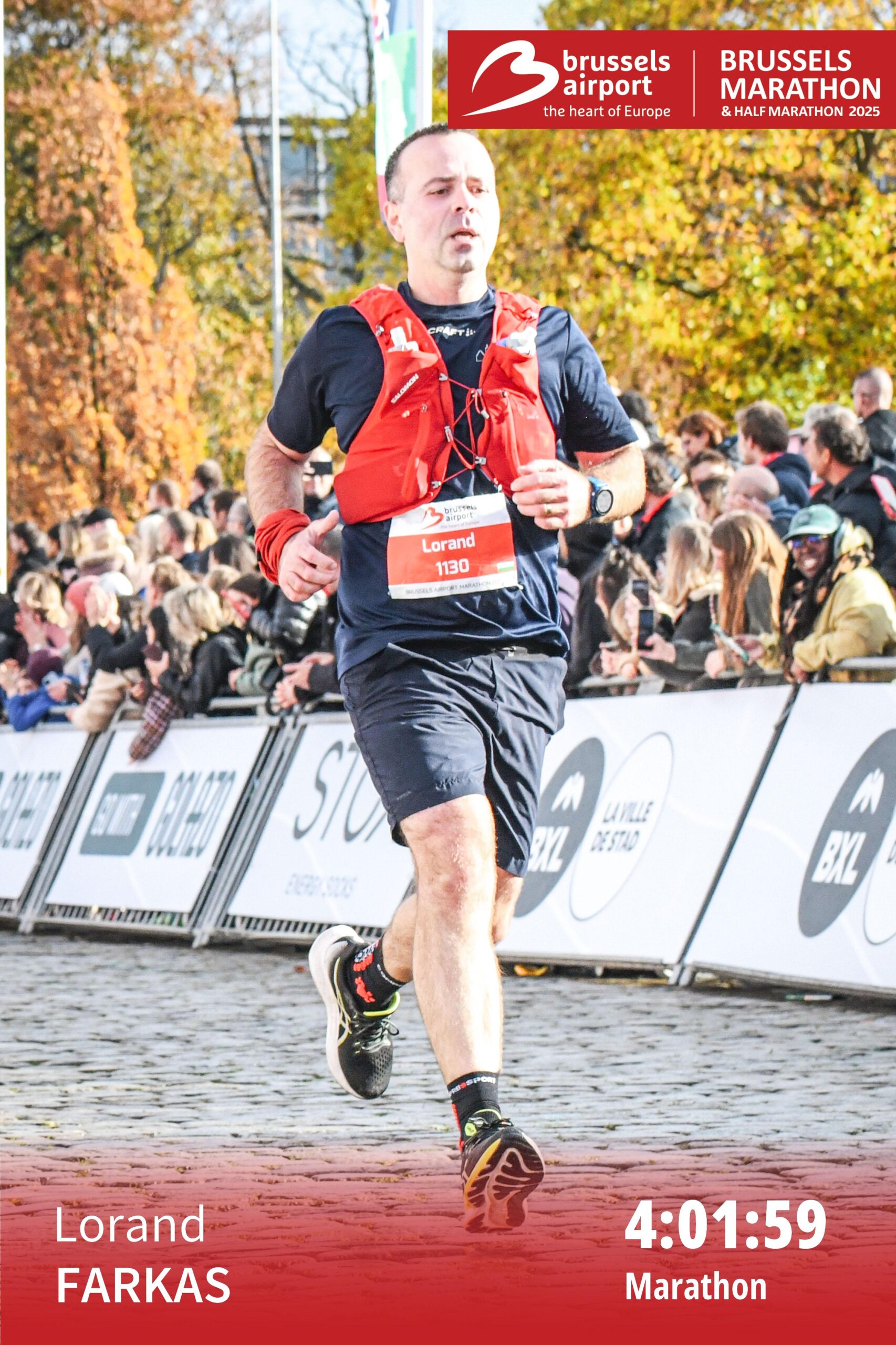
Brussels Airport Marathon – Goal Race (2nd of November)
The objective was simple:
break 4 hours.
On paper, it felt realistic.
But I underestimated one key factor:
the elevation — 474 meters.
Official results:
- Time: 4:01:59
- Watch distance: 42.54 km
- Watch marathon time: 4:00:03
Frustrating?
Yes.
Because I was close enough to feel it…
but just far enough not to have it officially.
But at the same time — I knew the reality.
GPS isn’t perfect.
Race lines aren’t either.
And official time is the only one that counts.
What mattered more was how I got there.
Because this time:
- fueling was locked in;
- hydration was consistent;
- pacing was controlled;
No cramps.
No collapse.
And in the final kilometers…
I pushed.
Not just surviving — racing with what I had left.
That changed everything.
Because this wasn’t like my first marathon.
This time:
I finished strong.
Looking back, this race wasn’t a failure.
It felt like confirmation.
That I’m close.
That I understand the process better.
And that the next step is within reach.
Becoming the Runner I Wanted to Be
End of November: challenge.
Run my age → 38 km.
In previous years, I was capable of doing this distance only on the stationary bike.
But this time…
I ran it.
Not a race.
Not a breakthrough.
A confirmation.
I wasn’t just setting goals anymore.
I was becoming the person who could achieve them.
8. The Subtle Shift: Learning More Than Running
At some point during the year, something started to change.
Not in how much I was running —
but in how much I wanted to go deeper into it.
I found myself replaying sessions in my head.
A run would end…
but the analysis wouldn’t.
Why did this feel harder than expected?
Why did that session work so well last week… but not today?
Some mornings looked like this:
Wake up.
Breathing session.
Coffee.
And instead of scrolling…
I was reading about training zones, fatigue, adaptation.
Other days, it happened right after a run.
Still sweaty.
Still tired.
Standing there, looking at my watch…
Trying to understand what the numbers actually meant.
Following a plan wasn’t enough anymore.
I didn’t just want to execute.
I wanted clarity.
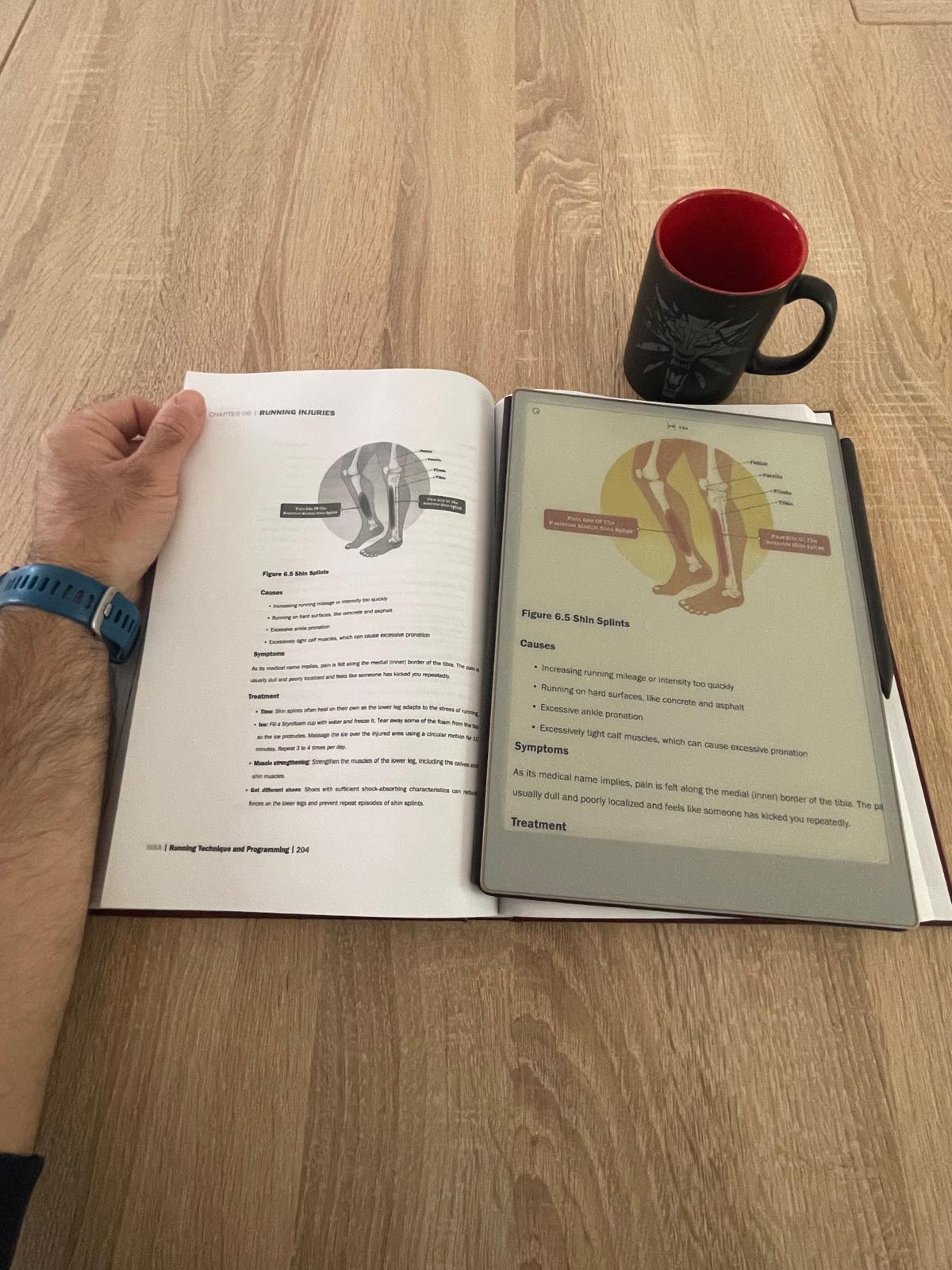
So, in September, I made a decision.
I started learning to become a running coach.
Not because I felt ready to coach others —
but because I wanted answers.
Training became something I actively questioned — not just followed.
9. Choosing the Longer Path
At that point, there was an easier option.
I could have hired a coach.
And I thought about it.
More than once.
Especially after sessions that didn’t go as planned.
Or weeks where fatigue didn’t make sense.
Because having someone tell you what to do…
removes doubt.
But it also removes something else: the need to figure things out yourself.
And that’s what mattered most to me.
I didn’t just want better results.
I wanted to understand:
- why a session is structured a certain way;
- how to adapt when things go wrong;
- how to balance load, recovery, progression;
So, I stayed on the harder path.
The one with:
- more trial and error;
- more mistakes;
- more second-guessing;
But also:
more control over the process.
It’s not the fastest path.
But it’s the one that will take me further.
10. What 2025 Really Taught Me
2025 wasn’t one breakthrough.
It was accumulation.
Lessons:
- Awareness beats blind consistency;
- Energy balance is non-negotiable;
- Small imbalances don’t stay small;
- Data is useful — if you understand it;
- You can’t outsource understanding forever;
These didn’t come from theory.
They came from experience.
11. Looking Ahead
2025 feels like a starting point.
I now have:
- marathon experience;
- trail running foundation;
- UTMB index;
- growing knowledge;
The goal is clear:
Trail running.
Longer distances.
UTMB before 45.
And I keep learning.
I’m not there yet.
But I’m closer.
12. Closing
The Real Shift
When I look back at 2025, it’s easy to focus on:
- kilometers;
- races;
- results;
But that’s not what mattered most.
The real shift was how I approached running.
The Gear That Supported the Journey
Throughout the year, I didn’t upgrade everything at once.
I adjusted things gradually.
Based on what I actually needed — not what looked good on paper.
I didn’t chase trends.
I kept what worked.
Some pieces became part of my routine without me even realizing it.
Others solved very specific problems at the right time.
For road running, I added:
- Asics Gel Pursue 10 – mainly to rotate with my aging Saucony Triumph 22;
- Asics Superblast 2 – which quickly became my go-to for longer efforts;
For trail running:
- Nnormal Tomir 2.0 – added to rotate with my Hoka Speedgoat 6 and extend their lifespan;
For races and long efforts:
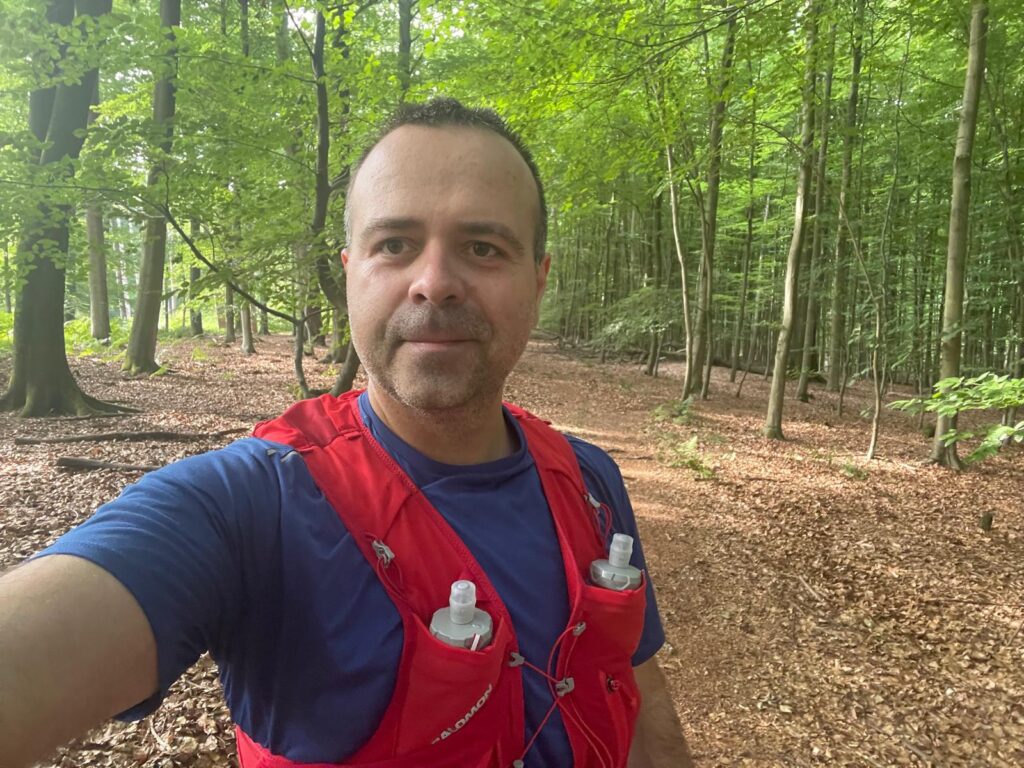
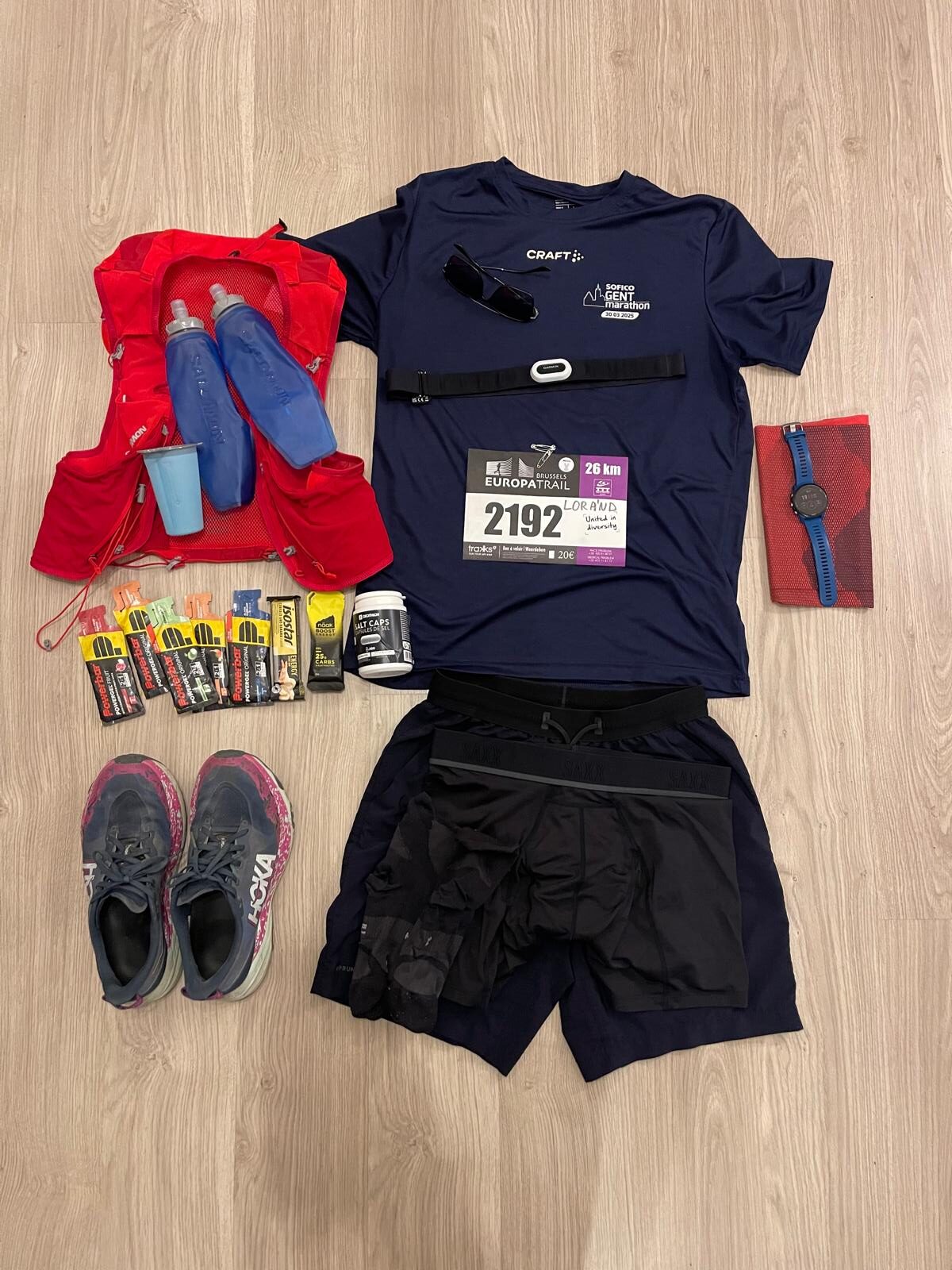
- Salomon Adv Skin 12 Hydration Vest + 500ml soft flasks – This was the vest I trusted for longer efforts, especially during Europa Trail.;
- Compressport Free Belt Pro – simple, efficient, always there when needed;
- Kiprun Trail Running X-Light Cup – mandatory in some races, but also practical overall;
For comfort and consistency:
- Compressport Pro Racing V4.0 Trail;
- Danish Endurance Merino socks;
- Balega Enduro Quarter socks;
- Saxx Kinetic Sport Boxers – Light-Compression Mesh;
- Danish Endurance Sport Boxers;
These are the kind of things you don’t think about…
until they go wrong — and then they matter more than your shoes.
For strength and support:
- Corength 16kg kettlebells;
- 15kg resistance band;
- Corength weighted vest;
And then, small additions that made a difference:
- Salomon Custom Quiver;
- Nite Ize TagLit Magnetic LED Marker;
- 3D printed insoles;
- Garmin Index S2 Smart Scale;
Plus:
race t-shirts, buffs, and gear collected along the way.
Not planned.
But each one part of the journey.
Final Thought
It wasn’t perfect.
There were mistakes.
Miscalculations.
Moments where I pushed too much…
and moments where I had to pull back.
But that’s what made it valuable.
Because for the first time, I wasn’t just following a process.
I was making decisions inside it.
Adjusting.
Learning.
Owning the outcome.
And that changes everything.
In 2025, I didn’t just become a better runner.
I became responsible for how I run.
If 2024 built the habit…
and 2025 built the understanding…
Then the next step is clear.
Now it’s time to see how far I can take it.
If you’re on a similar journey — trying to become a better runner without shortcuts — you’re in the right place.
I share what works, what doesn’t, and everything in between.
If this post helped you:
- follow along for the next ones;
- or check the gear I actually use after 1800+ km of running this year.